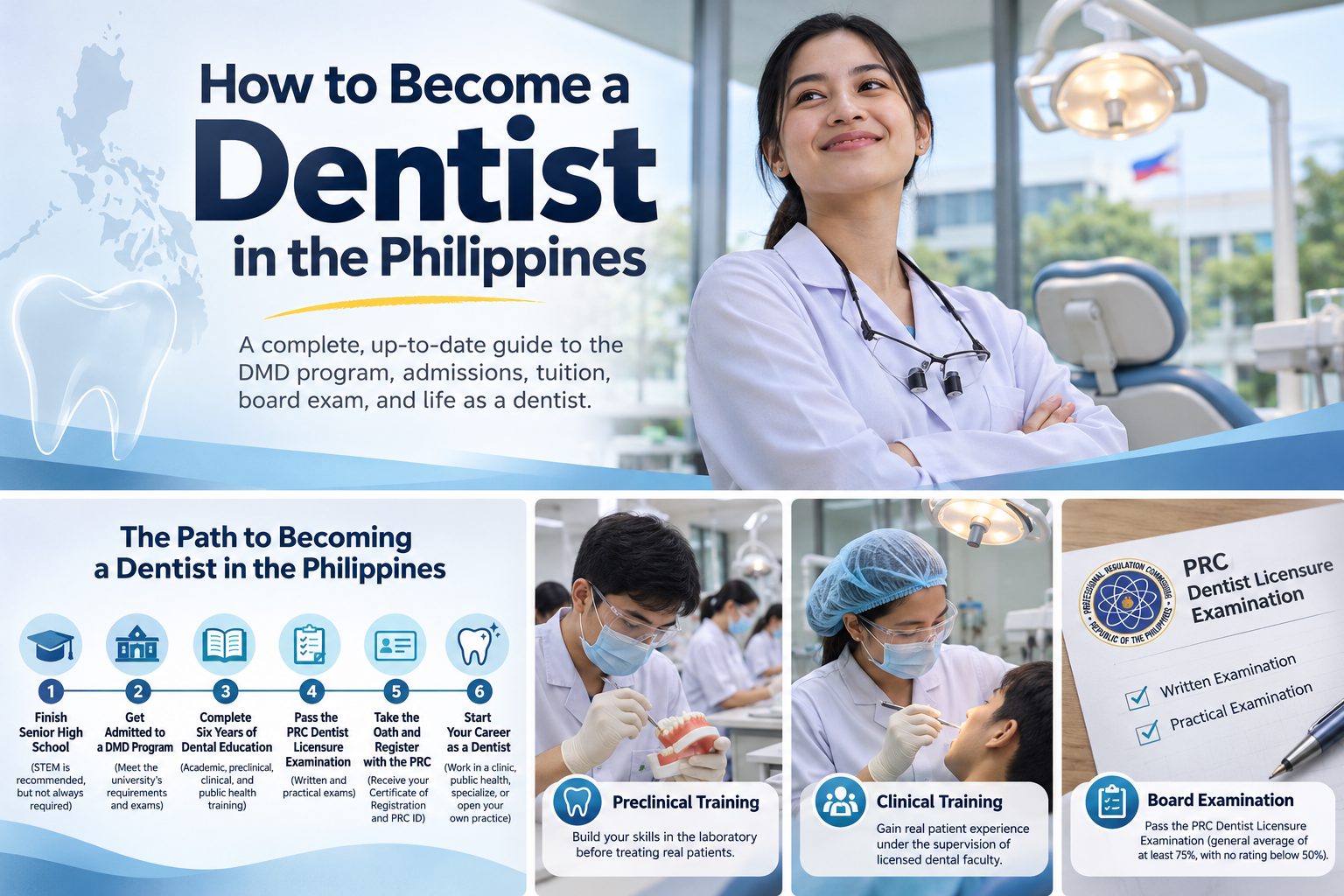
How to Become a Dentist in the Philippines: What It Really Takes
To become a dentist in the Philippines, you must complete a six-year Doctor of Dental Medicine (DMD) program at a recognized dental school, pass the Professional Regulation Commission (PRC) Dentist Licensure Examination, and complete the required registration and professional oath-taking.
That's the official path.
But six years is a long time, and dentistry is one of those professions that can look very different from the outside.
You might imagine yourself wearing a white coat, fixing teeth, building relationships with patients, and eventually opening your own clinic.
What you probably don't imagine is spending hours practicing on a plastic tooth, memorizing human anatomy, working through difficult laboratory exercises, or discovering how much patience it takes to become good at something that requires precision down to a fraction of a millimeter.
Dentistry is a combination of science, craftsmanship, healthcare, and human connection.
If you're considering it as a career, here's what you need to know about the education, admission requirements, tuition, board examinations, and life that comes afterward.
1. Start With the Right Senior High School Preparation
You don't need to finish a separate college degree before entering a Doctor of Dental Medicine program in the Philippines.
Qualified senior high school graduates can apply directly to dental school.
Is STEM required to become a dentist?
STEM is generally the most useful strand, but it isn't the only possible route.
Biology, chemistry, and physics provide a valuable foundation for dental education.
However, some universities accept eligible students from non-STEM academic strands through bridging programs.
For example:
- University of the East (UE): Accepts qualified STEM graduates into its regular DMD curriculum and eligible non-STEM Academic Track graduates into its bridging curriculum. Its published admission criteria specify a Grade 12 average of at least 85 for these applicants.
- Centro Escolar University (CEU): States that STEM is preferred but allows non-STEM applicants who complete the required three-unit bridging coursework.
- University of the Philippines Manila: Its College of Dentistry considers qualified applicants from different senior high school academic tracks, subject to university admission and dentistry-specific requirements.
The important lesson is that your senior high school strand influences your preparation, but the exact admission rules depend on the university.
If you're still choosing a strand, STEM is a sensible option. If you're already studying another strand, check the dental schools' actual policies before assuming you're ineligible.
2. Choose a Dental School That Prepares You for Real Practice
The school you choose will shape much of your next six years.
Several Philippine institutions offering Doctor of Dental Medicine programs include:
| Dental school | Location |
|---|---|
| University of the Philippines Manila | Manila |
| Centro Escolar University | Manila and other campuses offering DMD |
| University of the East | Manila |
| Cebu Doctors' University | Mandaue, Cebu |
These are examples, not a ranking or a complete list. Confirm current DMD offerings, admissions, and regulatory authorization directly with each institution.
What do dental school entrance exams involve?
Some schools assess more than academic performance.
For school year 2026–2027, UE announced that DMD applicants must first pass its college entrance examination before taking a dentistry qualifying examination with two components:
- An academic examination.
- A manual dexterity test.
UP Manila's College of Dentistry also publishes a dexterity examination requirement, with exercises that can include mirror-image drawings, wire steadiness tests, and wax carving.
Why test dexterity before you even know dentistry?
Because dentists work in a very small space, using instruments that demand controlled and deliberate movements.
You can understand the science perfectly and still find the physical work difficult.
Fortunately, manual skills improve with practice.
A dexterity examination doesn't mean every successful applicant already has the hands of an experienced dentist. It helps schools assess preparation and aptitude for the demands of the program.
Look beyond school reputation
Before enrolling, ask about the school's clinical facilities, faculty supervision, laboratory equipment, patient exposure, and graduation requirements.
Find out how students complete their clinical cases and what support exists when they have difficulty progressing.
Board examination performance can be informative, but look at results over several examination periods rather than focusing only on a single list of topnotchers.
A dental school should prepare you for more than an examination.
It should prepare you to care for someone who is trusting you with their health.
3. Complete Six Years of Dental Education
The Philippine Doctor of Dental Medicine program follows standards established by the Commission on Higher Education.
Under CHED Memorandum Order No. 3, Series of 2018, dental education consists of at least six years of full-time study.
The program progresses from general education and foundational sciences to preclinical education and supervised clinical training.
The framework includes four semesters of clinical dentistry and three semesters of dental public health education, with the specific curriculum arranged by the institution.
Here's how that journey generally develops.
| Stage | Main focus |
|---|---|
| First year | General education and foundational sciences |
| Second year | Basic medical and dental sciences |
| Third and fourth years | More advanced dental science, laboratory work, and preclinical skills |
| Fifth and sixth years | Supervised clinical care and community-based dental public health training |
| After graduation | PRC licensure examination and professional registration |
This is a simplified guide to the progression, not an exact subject-by-subject curriculum for every school.
The early years: Learning the science behind the smile
In the beginning, dental school may feel surprisingly similar to other demanding health science programs.
You'll study subjects such as anatomy, physiology, microbiology, pathology, and biochemistry.
You might wonder why you need to learn so much about the human body when your future career focuses on teeth.
The answer is that oral health doesn't exist separately from general health.
A dentist may encounter patients with diabetes, allergies, heart conditions, or medications that affect treatment decisions.
Understanding these connections is essential to safe patient care.
Your early education builds the foundation for the decisions you'll eventually make in the clinic.
The preclinical years: Where your hands catch up with your brain
This is where dentistry begins to distinguish itself.
You'll learn about dental materials, instruments, tooth preparation, restorations, prosthodontics, and other practical subjects.
Much of this training takes place in laboratories and simulation facilities.
Instead of immediately treating patients, students practice on models and simulated teeth.
Imagine spending an afternoon carefully preparing a tooth, only to discover that you've removed too much material or haven't achieved the required shape.
You review your work, receive feedback, and try again.
The exercise can be frustrating.
But that repetition is part of how clinical skills develop.
In dentistry, being almost precise enough isn't always precise enough.
It's also why attention to detail, patience, and the willingness to learn from mistakes matter as much as academic ability.
4. Enter Clinical Training and Work With Real Patients
The later years of dental education introduce one of the biggest transitions in the program.
You move from practicing procedures on models to treating patients under the supervision of licensed dental faculty.
Depending on the curriculum and available cases, supervised training can involve restorative care, periodontal care, endodontics, prosthodontics, oral surgery, pediatric dentistry, and other clinical areas.
You learn to examine patients, understand their concerns, evaluate findings, document care, and explain treatment options.
But clinical dentistry teaches lessons that textbooks can't fully prepare you for.
Patients aren't simply clinical requirements
Imagine having a clinical case scheduled for the morning.
You've prepared your materials and reviewed the patient's treatment plan.
Then the patient cancels.
Perhaps they couldn't afford transportation. Maybe they couldn't leave work. Maybe they're frightened of the procedure.
Your academic schedule hasn't changed, but your patient's circumstances have.
One of the lessons of clinical training is that dentistry involves working with real people whose needs and choices don't always fit neatly into a timetable.
You must learn to manage appointments, communicate responsibly, and respect patient decisions.
This is where technical education becomes professional education.
Good communication becomes part of your clinical skill
A patient may not understand terms such as endodontic treatment, periodontal disease, or prosthodontic rehabilitation.
Your responsibility isn't simply to know what those words mean.
It's to explain the situation clearly enough for the patient to understand the findings, choices, risks, and expected outcomes.
Sometimes the most valuable thing you do during an appointment is listen carefully.
Does everyone graduate in exactly six years?
Not necessarily.
Six years is the standard minimum duration under CHED's DMD framework.
Students still need to satisfy the academic and clinical requirements established by their institution.
Incomplete competencies, academic difficulties, or other circumstances can affect an individual's graduation timeline.
If you're planning your finances, don't assume that finishing in precisely six calendar years is guaranteed.
5. How Much Does It Cost to Study Dentistry in the Philippines?
This is one of the most important questions for students and parents.
And unlike the six-year curriculum, there's no single national tuition fee for dentistry.
Costs depend on the school, year level, enrollment arrangement, materials, and other academic expenses.
A verified 2026–2027 tuition and school-fee example
The University of the East published the following estimates for Filipino incoming freshmen in the first semester of school year 2026–2027:
| Program | Full payment upon enrollment | Total under installment scheme |
|---|---|---|
| Doctor of Dental Medicine | ₱89,275 | ₱91,951 |
| DMD with Bridging Program | ₱91,925 | ₱94,602 |
Source: University of the East — College of Dentistry school fees, SY 2026–2027.
These figures cover the school's published first-semester tuition and other school fees for the specified freshmen programs.
They are not estimates for all universities, all year levels, or the complete six-year course.
Remember the costs beyond tuition
Dental education can require specialized instruments, laboratory materials, personal protective equipment, and clinical supplies.
Depending on the school, some items may be included in fees while others must be purchased separately.
You should also consider transportation, accommodation, food, review materials, and eventual licensure expenses.
Before committing to a university, ask for a full estimate of the program, including the later clinical years.
It's worth asking whether the school provides financial assistance, scholarships, or installment arrangements.
For families making a major financial decision, a detailed budget is much more useful than a rough tuition estimate.
6. Graduate and Take the PRC Dentist Licensure Examination
After earning your DMD degree, you'll need to meet the requirements for professional licensure.
Dentistry is a regulated profession in the Philippines under Republic Act No. 9484, also known as the Philippine Dental Act of 2007.
Qualifying DMD graduates must pass the licensure examination administered by the Professional Regulatory Board of Dentistry under the PRC.
What is included in the dentist board exam?
The examination consists of two components:
Written examination
This assesses your theoretical and professional knowledge.
Based on the PRC's May 2026 written examination program, tested areas included:
- General and oral anatomy and physiology
- Pathology, microscopic anatomy, embryology, and microbiology
- Restorative dentistry, community dentistry, and public health
- Prosthodontics and dental materials
- Oral diagnosis, radiology, and oral surgery
- Anesthesiology and pharmacology
- Pediatric dentistry and orthodontics
- Dental jurisprudence, ethics, and practice management
- Periodontics and endodontics
Practical examination
This assesses hands-on professional competencies.
For example, the May 2026 practical examination program included exercises involving cavity preparations, fixed partial denture preparations, removable partial denture design, and complete denture work.
Specific examination instructions, materials, exercises, and schedules can change. Always use the PRC program issued for your own examination.
What is the passing score?
Under Section 16 of Republic Act No. 9484, an examinee must obtain:
- A general weighted average of at least 75%.
- No subject rating below 50%.
These are statutory requirements, not school-specific standards.
When is the dentist board exam held?
The PRC announces examination schedules each year.
For the November 2026 cycle, the published schedule is:
| Examination phase | Scheduled dates |
|---|---|
| Written examination | November 22–24, 2026 |
| Practical examination | November 28–December 5, 2026 |
| Target release of results | December 14, 2026 |
The October 23, 2026 application deadline for this cycle has already passed.
For subsequent examination periods, check the PRC examination calendar and current announcements rather than relying on an earlier schedule.
What are the application requirements?
The PRC's published documentary requirements for first-time dentistry examinees include:
- PSA birth certificate.
- PSA marriage certificate for applicants covered by the stated requirement.
- Transcript of Records with the required photograph and board examination remarks.
- NBI clearance meeting the stated validity requirements.
The PRC currently lists an examination fee of ₱1,300.
Applications and additional instructions are available through the PRC website.
Verify the applicable requirements and amounts when applying.
7. Pass the Exam, Take Your Oath, and Register as a Dentist
Passing the licensure examination is a major milestone, but it isn't the last administrative step.
Successful examinees must complete the professional oath-taking and registration requirements.
Under RA 9484, successful examinees must take the prescribed professional oath before beginning practice.
The PRC issues a Certificate of Registration and Professional Identification Card through its registration process.
For the May 2026 examination, the PRC instructed successful applicants to complete initial registration online and personally register in the Roster of Registered Professionals.
Once you have satisfied the applicable requirements, you can begin practicing within the scope of your registration.
It's a significant change.
You're no longer just a student practicing under faculty supervision.
You're a licensed professional responsible for your clinical decisions and professional conduct.
8. What Happens After You Become a Licensed Dentist?
You don't have to open your own dental clinic immediately.
In fact, there are several paths you can explore.
Work in an established dental practice
An associate position may provide opportunities to build experience and learn from established practitioners.
You'll encounter challenges that go beyond clinical procedures, including patient communication, recordkeeping, appointment management, and coordination with other clinic staff.
Explore public health dentistry
Dentists also contribute to oral health through community programs, public institutions, and educational activities.
This work can involve prevention, oral health promotion, and improving access to dental services.
For professionals interested in community healthcare, public health dentistry can be a meaningful direction.
Pursue advanced training
Some dentists pursue further professional training in fields such as orthodontics, periodontics, endodontics, pediatric dentistry, or prosthodontics.
The additional qualifications and recognition requirements depend on the field and relevant professional regulations.
A general DMD degree and professional license should not be confused with formal specialist qualifications.
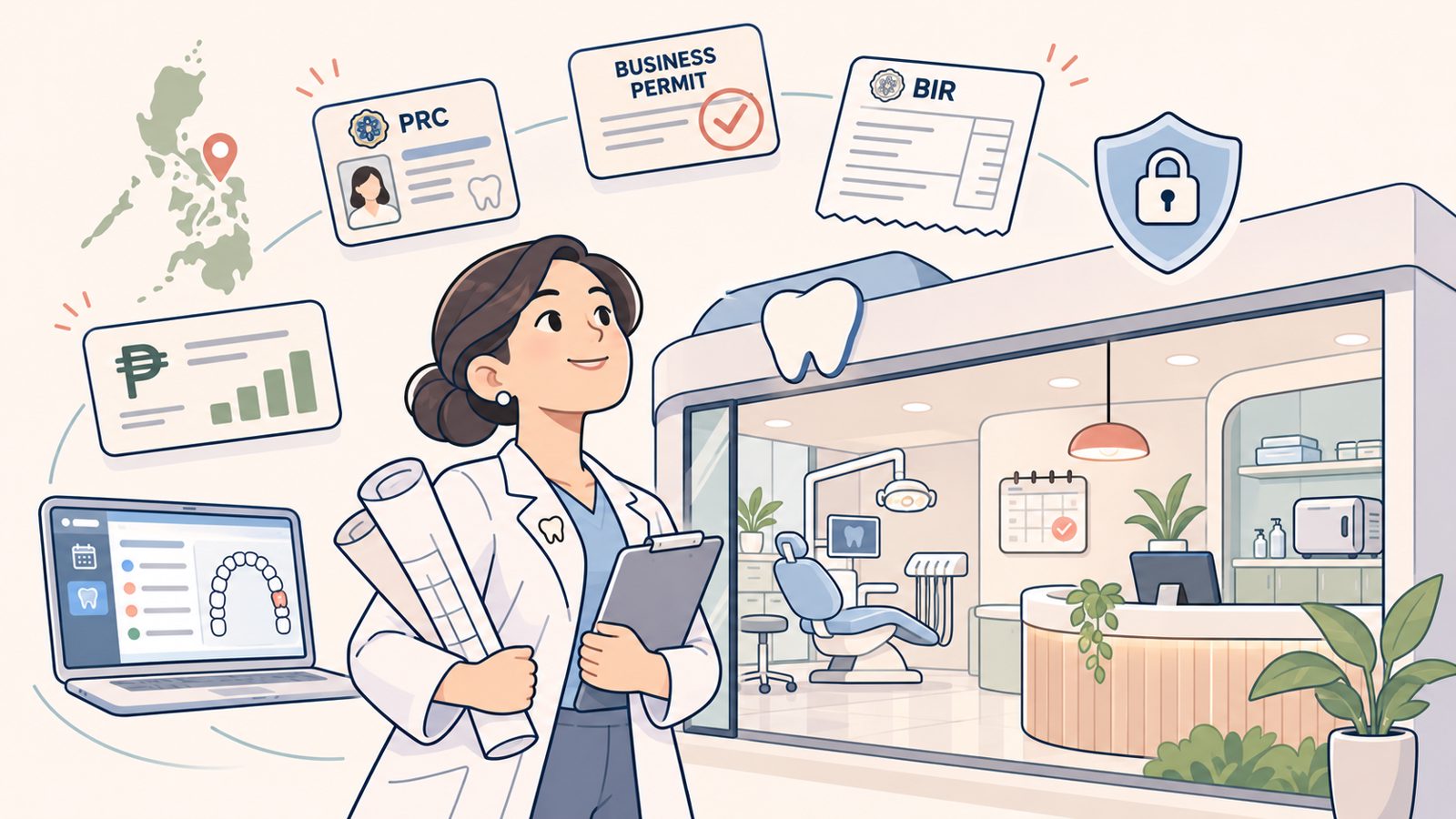
Open your own dental clinic
Many dentists eventually consider establishing a private practice.
This creates opportunities for professional independence, but it also introduces business responsibilities.
You need to manage equipment, staffing, scheduling, billing, patient records, regulatory requirements, and everyday operating costs.
Consider something as ordinary as a returning patient.
The dentist needs to know what treatment was previously performed, what problems were identified, what was recommended, and what still needs attention.
Accurate dental charting, treatment documentation, and organized medical histories help support continuity of care.
Dental clinic management software can assist with the administrative side of these responsibilities, but the dentist remains responsible for clinical decisions.
It's worth learning these operational skills even if you don't plan to become a clinic owner immediately.
9. The Things Nobody Can Fully Teach You Before Dental School
There's something appealing about the image of becoming a dentist.
The white coat. The professional title. The possibility of helping people and eventually running your own practice.
Those are understandable ambitions.
But it's worth looking beyond them.
Dentistry demands consistency
You can't rely entirely on being naturally talented.
The work often requires doing something carefully, assessing the result, and repeating the process until your technique improves.
Progress may be gradual and sometimes frustrating.
Dentistry is physically demanding
Clinical work involves detailed manual movements, prolonged concentration, and careful positioning.
Developing good ergonomic habits is important for long-term professional health.
Not every patient will be easy to help
Some patients are nervous. Others may have financial limitations, complicated medical histories, or expectations that cannot realistically be met.
You need clinical judgment, patience, and the ability to explain difficult information without making the patient feel dismissed.
You must keep learning
Passing the board exam doesn't mean your education has ended.
Dentistry continues to develop through research, improved materials, new techniques, and evolving professional standards.
Continuing professional development is part of maintaining professional competence.
The PRC also maintains continuing professional development requirements and renewal procedures for registered professionals.
10. Is Becoming a Dentist in the Philippines Worth It?
That depends on what you're hoping to get from the profession.
Dentistry can offer meaningful patient relationships, interesting clinical work, opportunities for advanced training, and the possibility of professional independence.
But it also involves a long educational commitment, potentially substantial costs, demanding practical training, and serious responsibility.
A dental license doesn't guarantee a particular salary or a successful private practice.
Income depends on employment arrangements, location, experience, services offered, patient demand, and business costs.
If you're considering dentistry mainly because you expect it to be prestigious or financially rewarding, take the time to understand the actual work.
Try speaking with current dental students and practicing dentists.
Ask them about their routines, difficult experiences, school expenses, and what they wish they'd known before entering the program.
If possible, attend university orientation events or visit dental school facilities through approved school activities.
The more you understand the profession before enrolling, the more informed your decision will be.
Frequently Asked Questions
How many years does it take to become a dentist in the Philippines?
The Doctor of Dental Medicine program requires at least six years of full-time study under CHED's curriculum standards. After graduation, you must pass the PRC licensure examination and complete professional registration requirements.
Can an ABM or HUMSS student become a dentist?
Potentially, yes. Some schools accept eligible applicants from non-STEM academic strands. The University of the East, for example, has a bridging curriculum for qualified non-STEM Academic Track applicants. Admission requirements vary.
Do you need to study medicine before dentistry?
- You can enter an eligible DMD program directly after senior high school. A medical degree is not a prerequisite.
Is dentistry difficult?
Dentistry requires scientific knowledge, manual precision, consistent practice, and the ability to work with patients. Students may find different parts challenging depending on their abilities and interests.
How much does dental school cost in the Philippines?
Costs vary considerably. As a documented example, UE's first-semester regular DMD estimate for Filipino freshmen in SY 2026–2027 is ₱89,275 for full payment upon enrollment. This does not represent the entire course or the cost at other schools.
Can you practice dentistry without passing the board exam?
A DMD graduate generally cannot independently practice as a licensed dentist without meeting the applicable licensure and registration requirements. RA 9484 provides specific provisions for supervised students and certain graduates working as dental assistants under direct supervision.
Can a Filipino dentist work abroad?
Possibly, but Philippine licensure does not automatically authorize practice in another country. Dentists must satisfy the destination country's professional licensing, educational assessment, immigration, and other applicable requirements.
Final Thoughts: The Six Years Are Only the Beginning
Becoming a dentist in the Philippines takes more than completing a course and passing an examination.
You'll spend years developing scientific knowledge, refining your manual skills, and learning to care for patients responsibly.
Along the way, you'll discover that dentistry involves much more than knowing how to treat teeth.
It requires judgment, communication, patience, and the ability to work with people when they're uncomfortable or uncertain.
If you're considering this career, begin with the practical questions.
Can your family support the educational costs? Does the school offer the facilities and clinical experience you need? Are you prepared for six years of demanding study and supervised training?
Most importantly, can you imagine finding satisfaction in the everyday work of dentistry, not just in the title that comes with it?
Because earning the license is the beginning of your professional journey.
What matters afterward is the kind of dentist you choose to become.
Official Sources
Research checked November 20, 2026.
- CHED — Policies, Standards and Guidelines for the Doctor of Dental Medicine Program, CMO No. 3, Series of 2018
- Republic Act No. 9484 — Philippine Dental Act of 2007
- PRC — Licensure Examination Requirements
- PRC — 2026 Examination Schedule
- PRC — May 2026 Written Examination Program
- PRC — May 2026 Practical Examination Program
- UE — DMD Admission Requirements
- UE — 2026–2027 Dentistry Qualifying Examination Announcement
- UE — Tuition and Other School Fees, 2026–2027
- UP College of Dentistry — Applicant Information
- Centro Escolar University — DMD Program Specification
Editorial note: Admissions, tuition, examination dates, and administrative requirements can change. The dated examples above should be reviewed when a new academic year or examination schedule is announced.