Dental Certificate and Clearance in the Philippines: Complete Guide
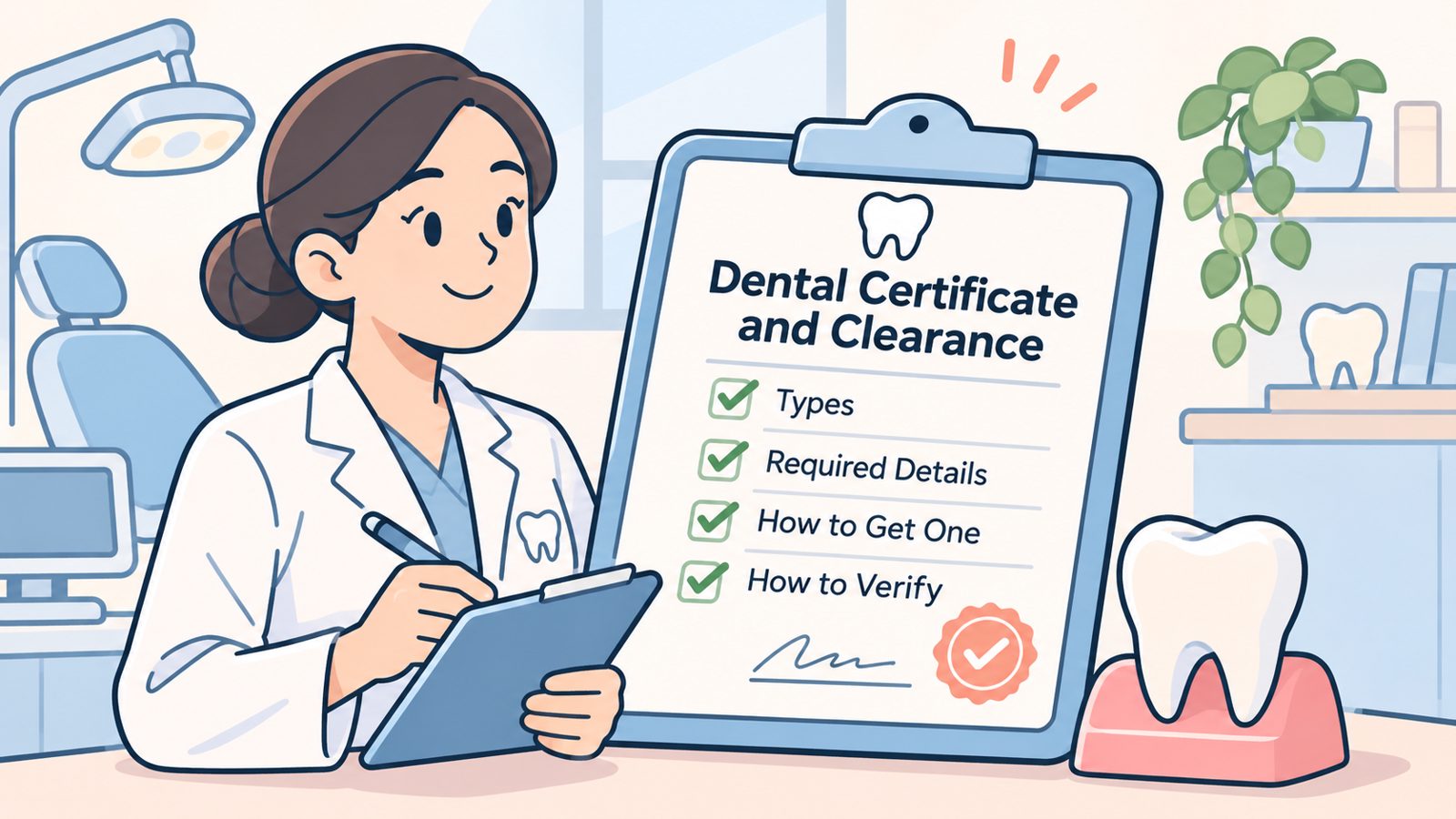
A dental certificate is a document issued by a licensed dentist to confirm a patient's dental examination, treatment, oral health findings, or professional assessment. A dental clearance is a related document stating whether the patient meets particular dental health requirements or has been assessed for a specified purpose.
In the Philippines, patients may need these documents for employment, school enrollment, seafarer applications, government service, or other institutional requirements.
A properly issued certificate identifies the patient and the issuing dentist, states the relevant examination or treatment findings, includes the appropriate dates, and carries the dentist's signature and professional credentials.
There is no single certificate format that automatically satisfies every school, employer, agency, or medical facility. The required wording and supporting examinations depend on the purpose of the document.
What Is the Difference Between a Dental Certificate and a Dental Clearance?
The two terms are sometimes used interchangeably, but they serve different purposes.
| Dental certificate | Dental clearance |
|---|---|
| Documents an examination, treatment, or dental condition | States an assessment or conclusion for a specific purpose |
| May describe findings or procedures performed | May confirm that specified dental requirements have been met |
| Can be issued after a dental consultation or treatment | Usually depends on an assessment relevant to the requested clearance |
| Does not necessarily mean the patient has no dental problems | Does not necessarily mean the patient has perfect oral health |
For example, a patient who undergoes a tooth extraction may receive a dental certificate describing the procedure and examination date. A separate clearance may be required if the patient is applying for work, joining a training program, or undergoing another medical procedure.
A dental clearance should reflect what the dentist actually assessed. It is not a guarantee that the patient has no dental disease or will remain free of future dental problems.
Types of Dental Certificates and Clearances in the Philippines
The type of certificate depends on why the patient needs it. The categories below describe common purposes, not universally standardized or legally prescribed forms.
1. Dental Certificate for Employment
A pre-employment dental certificate documents a dental assessment requested as part of hiring or occupational health requirements.
Employers may ask about the applicant's oral health or specific dental conditions relevant to their screening. The certificate may include the examination date, relevant findings, and the dentist's conclusion within the scope of the assessment, such as fit to work now or fit after recommended treatment.
Not all Philippine employers require a dental clearance. Applicants should check the employer's exact requirements before scheduling their appointment.
2. Dental Clearance for Seafarers and OFWs
Seafarers and overseas Filipino workers may meet dental screening requirements as part of their deployment or medical evaluation.
For seafarers, the dental examination is part of the pre-employment medical examination (PEME) under DOH Administrative Order No. 2007-0025, whose oral health standard reads: "There shall be no mouth disease, gum infections and dental defects." Dental findings form part of a broader medical fitness assessment, so a dental certificate alone is not equivalent to a complete seafarer's medical fitness certificate.
Requirements also depend on the destination, employer, manning agency, and occupational role. Patients should confirm the required form, examining facility, validity period, and acceptance rules with their manning agency or authorized medical provider before obtaining the clearance.
3. Dental Certificate for School Enrollment
Schools and universities may request a dental certificate during admission, enrollment, transfer, or participation in particular activities.
A school dental assessment may document the student's oral health findings, the examination date, and whether further dental attention is recommended. Requirements vary by institution: a school may require its own health examination form or an assessment by its designated dentist.
4. Dental Clearance for Government and Uniformed Service Applicants
Applicants to organizations such as the Philippine National Police (PNP), Armed Forces of the Philippines (AFP), Bureau of Fire Protection (BFP), or Bureau of Jail Management and Penology (BJMP) may be asked to undergo a dental evaluation.
The specific standard, acceptable provider, and documentation depend on the agency and the application process. Applicants should not assume that a certificate from any private clinic will automatically satisfy the agency's dental examination requirements.
5. Dental Treatment Certificate
A dental treatment certificate records that a patient received dental care. Depending on the treatment and purpose, it may identify:
- Date of consultation or procedure
- Nature of the dental treatment performed
- Tooth or teeth treated, when relevant
- Post-treatment instructions or recommendations
- Advised rest period, if clinically justified
For example, a patient who has undergone oral surgery may request documentation to explain a work or school absence. The dentist determines any recommended rest period based on the treatment and the patient's condition, rather than automatically issuing a fixed number of days.
6. Dental Clearance Before a Medical Procedure
A physician may request a dental assessment before certain treatments or procedures when oral conditions could affect clinical management.
The dentist may document relevant findings, necessary dental care, or the assessment requested by the referring clinician. A dental clearance in this situation is not a substitute for medical clearance: the treating medical team remains responsible for decisions within its own scope of practice.
7. Dental Certificates for Orthodontic Treatment or Sports
An orthodontic treatment certificate may confirm that a patient is undergoing orthodontic care or requires continuing appointments.
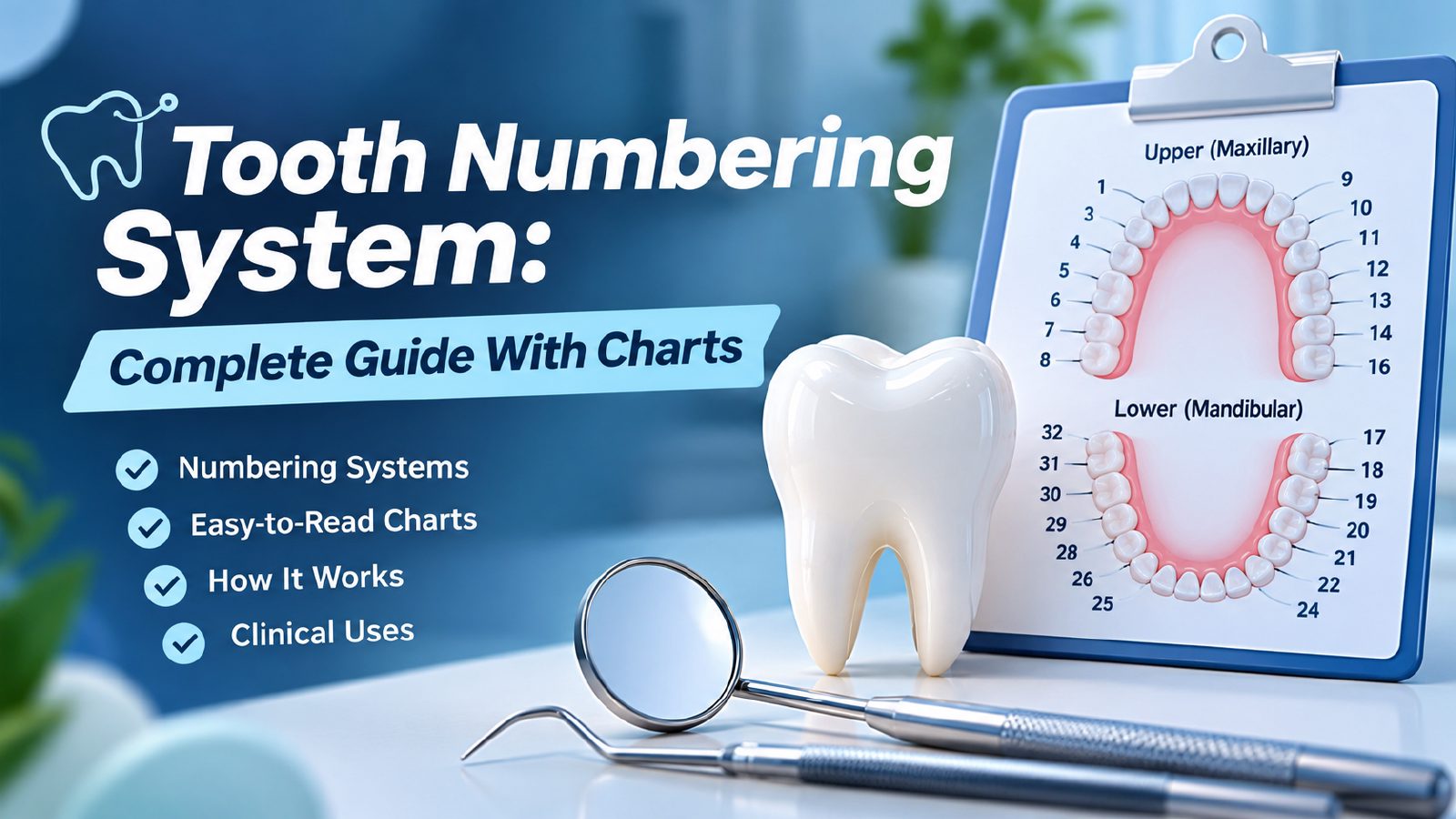
For sports, a dental assessment may form part of a wider health screening. Some organizers set their own rules: the Palarong Pambansa, for example, asks athletes for a dental certificate with the full-mouth dental chart, issued within six months. If your clinic is new to charting, our guide to dental charting explains the symbols and numbering.
Neither certificate is a general medical fitness clearance unless the appropriate qualified healthcare professional has separately made that determination.
What Must a Valid Dental Certificate Include?
A trustworthy dental certificate clearly establishes who was assessed, who issued the document, what it certifies, and when the assessment took place.
The checklist below describes recommended core information and common administrative expectations. Philippine law does not prescribe every field on a universal dental certificate template.
| Information | Why it matters |
|---|---|
| Patient's full name | Identifies the person assessed |
| Patient's age, or another identifier where necessary | Helps distinguish patients with similar names |
| Clinic name and contact details | Identifies the issuing facility |
| Examination or treatment date | Establishes when the assessment occurred |
| Certificate issuance date | Establishes when the document was created |
| Purpose of the certificate | Clarifies what the document is intended to support |
| Clinical findings or treatment statement | Explains what the dentist is certifying |
| Dentist's full name | Identifies the responsible professional |
| PRC license number | Supports verification of professional credentials |
| Dentist's signature | Authenticates professional issuance |
| Certificate number or verification reference | Helps the clinic and recipient trace the document |
Many clinics also print the dentist's PTR (Professional Tax Receipt) number beside the PRC license number. A recipient may also require specific wording, forms, supporting test results, or an expiration date.
A clinic letterhead, QR code, or document seal alone does not prove that a certificate is genuine. The issuing dentist's identity, professional authorization, the clinical basis, and the document's authenticity matter more.
Who Is Authorized to Issue a Dental Certificate?
A professional dental assessment should be certified by a dentist legally authorized to practice dentistry in the Philippines. Republic Act No. 9484, the Philippine Dental Act of 2007, regulates dental practice and establishes the professional registration framework for dentists.
Administrative staff may collect patient details, prepare documents, and assist with printing. They should not make dental findings or issue a dentist's professional opinion under the dentist's name. The dentist reviews the document and takes responsibility for its clinical statement.
How to Get a Dental Certificate in the Philippines
The usual process involves an examination, documentation of findings, and issuance by the responsible dentist.
- Confirm the requirements. Ask the school, employer, manning agency, or requesting organization whether it requires a particular form, accredited provider, or validity period.
- Schedule a dental consultation. Tell the clinic why the certificate is needed.
- Provide identification and relevant records. Bring the required ID, referral, agency form, or previous dental documents when applicable.
- Undergo the appropriate assessment. The dentist reviews the relevant history and performs the examination needed for the request.
- Discuss the findings. The dentist explains whether further care or additional assessment is needed.
- Receive the document. The dentist reviews and issues a certificate that accurately reflects the assessment.
- Check the details. Before submitting it, confirm that the name, dates, dentist's details, and certificate statement are correct.
Depending on the findings and the requesting organization's standards, an examination may not immediately result in a clearance.
Can a Dentist Issue a Certificate Without Examining the Patient?
A dentist should not certify a current oral health condition without a sufficient professional basis.
A certificate documenting a previous treatment may be supported by existing clinical records. A request for a current dental clearance, however, may require a new examination. The right approach depends on what is being certified and how reliable and relevant the available records are.
A patient should never request, and a clinic should never issue, a certificate falsely describing an examination or treatment that did not occur. Issuing a false medical certificate is punishable under Article 174 of the Revised Penal Code.
Dental Certificate Sample Format
The following example illustrates the general structure of a dental certificate. It is not an official government template; the dentist adapts it to the actual findings and the recipient's requirements.
[DENTAL CLINIC NAME]
[Clinic Address] | [Contact Information]

DENTAL CERTIFICATE

Certificate No.: [Reference Number]
Date Issued: [Date]
Patient: [Full Name]
Examination Date: [Date]
Purpose: [Requested Purpose]

This is to certify that the above-named patient was examined
on [date].

Relevant findings or treatment:
[The actual examination findings or procedures performed.]

Professional assessment or recommendation:
[The dentist's conclusion, including relevant limitations.]

Issued upon the patient's request for [stated purpose].


______________________________
[Issuing Dentist's Name]
PRC License No.: [Number]
The example deliberately contains no blanket declaration that the patient is free of all dental disease. The dentist chooses wording consistent with the examination, the supporting records, and the purpose of the certificate.
How to Verify If a Dental Certificate Is Genuine
Employers, schools, and manning agencies may need to confirm that a submitted dental certificate was issued by an authorized dentist and has not been altered. Verification involves several separate checks.
Check the Dentist's PRC Registration
The Professional Regulation Commission provides an online professional license verification service. A receiving organization can use it to check the dentist's professional credentials.
This verifies professional registration, but does not prove that a particular document was issued by that dentist.
Confirm the Certificate With the Issuing Clinic
Find the clinic's contact details through a reliable source, rather than relying only on the telephone number printed on an unfamiliar certificate.
Where appropriate and permitted, ask the clinic to confirm whether it issued the document, its reference number, and whether the presented statement matches the original. Ask only for the information needed for the stated purpose.
Check Certificate-Specific Verification Information
Some clinics use numbered certificates or electronic verification systems.
For example, certificates issued through DentalDesk.ph's dental certificates carry a QR code and a verification code. Anyone can scan the code or enter it at dentaldesk.ph/verify to see whether the certificate is valid, void, or expired, and compare its statement word for word with the issued record. The page verifies certificates issued through DentalDesk.ph only.
A verification QR code is a feature of the issuing system, not a legal requirement for Philippine dental certificates.
Be Alert to Possible Warning Signs
A certificate deserves additional verification when it contains:
- Missing or inconsistent dentist information
- Names or dates that do not match the applicant's records
- Visible alterations to the examination findings
- A questionable signature or certificate reference
- A clearance statement that cannot be confirmed with the clinic
These are reasons to verify further, not conclusive proof of forgery.
How Long Is a Dental Certificate Valid?
No single validity period applies to every Philippine dental certificate or clearance.
The acceptable period depends on the receiving organization's requirements, the purpose of the certificate, the type of assessment, and any stated expiration.
A certificate documenting treatment on a particular date remains a record of that event; it does not establish the patient's current oral health indefinitely. A pre-employment clearance may need to be recent under the employer's own rules, and a school, government agency, or manning agency may set its own acceptance period.
Patients should confirm how recent the examination and certificate must be before submitting the document.
Patient Privacy and Dental Certificates
Dental certificates can contain sensitive personal information. Under the Philippine Data Privacy Act of 2012, information about an individual's health is sensitive personal information.
Clinics and organizations handling certificates should apply appropriate safeguards:
- Share only the information necessary for the stated purpose.
- Rely on an appropriate lawful basis for handling and disclosing health information.
- Limit access to authorized personnel.
- Confirm the identity and authority of people requesting certificate details.
- Store issued certificates and related records securely.
Employers and schools generally do not need access to a patient's dental chart to authenticate a certificate. Where possible, verify the document's authenticity and its conclusion without disclosing unrelated clinical information.
Common Mistakes When Issuing Dental Certificates
Errors in certificates can cause delays for patients and difficulties for clinics.
Issuing a Certificate With the Wrong Purpose
A certificate describing a previous filling may not satisfy a request for a current dental clearance. Identify the intended recipient and purpose before choosing a document format.
Using a General Clearance Statement Without Sufficient Findings
The statement should not go beyond what the dentist can support through examination and records. A limited examination should not be described as proof that the patient has no oral health problems.
Missing the Dentist's Professional Information
An incomplete name, an incorrect PRC license number, or a missing signature makes authentication difficult. Dentists should review their professional details before a document is issued.
Changing an Issued Certificate Without Recording the Correction
Changing an issued certificate creates uncertainty about which version is genuine. A better practice is to keep the original record, void it with the reason for the correction, and issue a replacement certificate.
Failing to Keep a Copy
Clinics should keep a record of every certificate issued, together with the supporting examination or treatment documentation, as professional, legal, and records-management requirements apply. Patient records in DentalDesk.ph keep issued certificates alongside the patient's clinical and administrative records.
How Dental Clinic Software Can Help With Certificates
Certificate preparation involves both clinical judgment and administrative work. The dentist determines what the document can accurately certify. The front desk prepares patient information, finds treatment dates, prints the certificate, and helps the patient receive it.
DentalDesk.ph's dental certificates support this workflow:
- Philippine templates for employment, seafarers, OFWs, uniformed service, school, sports, dental visits, medical procedures, treatment, and orthodontic care, each editable.
- Prefilled from the record: treatments, teeth, and visit dates come from the patient's recorded visits and the dental chart.
- Dentist-controlled issuance: front desk staff prepare drafts; only a dentist with a PRC license number on file reviews and issues them, in their own name.
- Numbered and dated automatically, with the dentist's PRC and PTR numbers on the clinic's letterhead.
- Signed on the page with the dentist's saved e-signature, or signed by hand on the printout.
- Verifiable by schools, employers, and agencies at dentaldesk.ph/verify.
- Void, never edit: a mistake is voided with a reason and a corrected certificate issued.
The software supports document preparation and verification. It does not replace the clinical examination or the dentist's responsibility for the content.
Frequently Asked Questions
Is a dental certificate the same as a medical certificate?
No, they are different. A dental certificate concerns a dental examination, treatment, or oral health assessment. A medical certificate generally concerns an assessment within a physician's scope of practice. The requesting organization may require both.
Does a dental certificate need a PRC license number?
Including the issuing dentist's PRC license number is strongly recommended because it allows professional verification. The exact required fields depend on the applicable rules and the recipient's requirements.
Can a patient get a dental clearance with cavities?
It depends on the severity and relevance of the findings and the standards of the receiving organization. A cavity does not automatically decide every clearance request: many clearances say the patient is fit after the recommended treatment. The dentist makes the assessment.
Can a dental certificate be issued online?
Electronic preparation and delivery may be possible, but the certificate still needs a legitimate professional basis and proper issuance. An online request alone does not establish that the patient has been examined or qualifies for a clearance.
How much does a dental certificate cost in the Philippines?
Fees depend on the clinic, the examination, any supporting procedures, and the documentation requested. Patients should ask the issuing clinic for its current fees.
Can a school or employer verify a dental certificate?
Yes. The receiving organization can verify the dentist's professional registration with the PRC and ask the issuing clinic for confirmation. When the certificate has a verification code, that offers another way to authenticate it.
A Valid Dental Certificate Starts With an Accurate Assessment
A dental certificate is more than a signed document. It is a professional statement supported by an examination, a treatment record, or other appropriate clinical evidence.
For patients, the priority is to get the right type of certificate for the intended purpose. For clinics, it is accurate documentation, dentist-controlled issuance, and reliable recordkeeping. For schools, employers, and manning agencies, it is confirming that the certificate is authentic, issued by an authorized dentist, and suitable for their requirements.
Dental clinics looking to simplify certificate preparation can explore DentalDesk.ph's dental certificates and clearances.
References
- Republic Act No. 9484: Philippine Dental Act of 2007
- Professional Regulation Commission: Online License Verification
- National Privacy Commission: Data Privacy Act of 2012
- National Privacy Commission: Implementing Rules and Regulations
- DOH Administrative Order No. 2007-0025: Revised Guidelines on the Conduct of Medical Examination for Seafarers
- Revised Penal Code, Article 174: false medical certificates
- Philippine Coast Guard: Citizen's Charter, Dental Clearance
- DMMMSU: Citizen's Charter, Medical and Dental Clearance
Last reviewed: November 23, 2026.
Disclaimer: This article is provided for general information. It is not legal or clinical advice. Requirements differ between employers, agencies, and schools and can change; confirm them with the office requesting the certificate.